
Top SBA 7(a) Lenders in Alabama for 2025
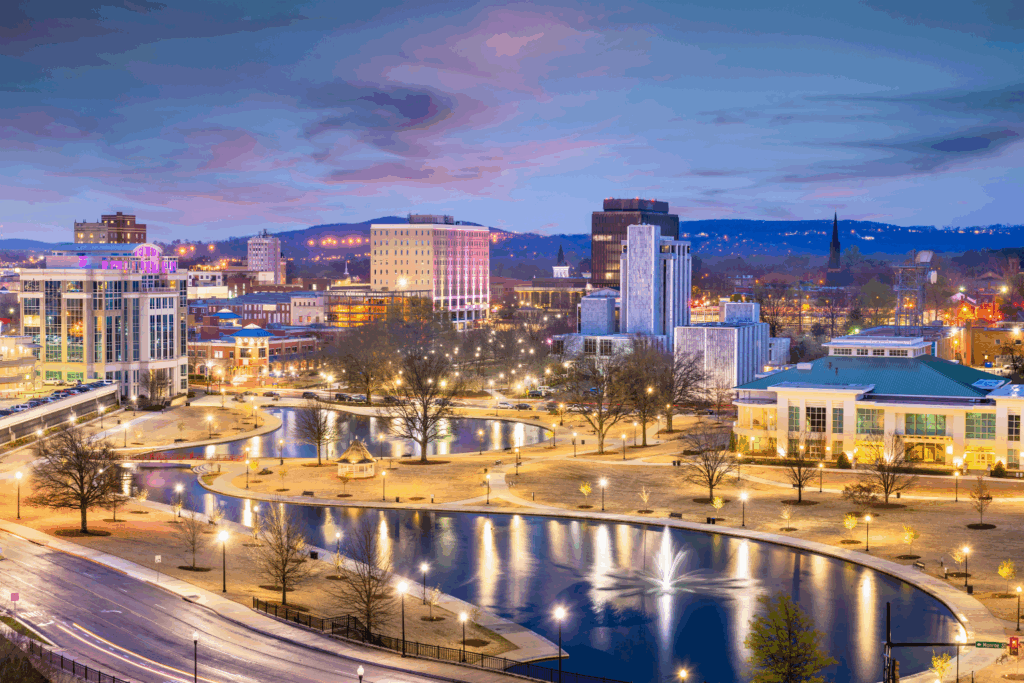
As of July 2025, the Small Business Administration has approved 529 SBA 7(a) loans in Alabama, totaling $288.79 million in financing. The average loan size stood at $545,914, underscoring a balanced mix of both high-dollar and moderate-sized loans flowing to small businesses throughout the state.
With over a dozen lenders participating in the program, the landscape reveals a notable concentration of activity among a few key players—primarily out-of-state banks with national reach—alongside selective engagement from Alabama-based lenders and fintech institutions.
Leading Lenders by Volume and Count
- Live Oak Banking Company (NC) led in total loan volume, funding $37.55 million across 27 loans. Its average loan size of $1.39 million was among the highest, suggesting a focus on larger transactions such as business acquisitions, commercial real estate, and franchise expansions. The North Carolina-based institution remains one of the SBA’s top-volume lenders nationally and maintains strong activity across southeastern states.
- Newtek Bank, National Association (FL) followed with 62 approvals and $23.21 million disbursed, with an average loan size of $374,387. As a technology-driven SBA lender, Newtek continues to cater to borrowers nationwide by offering scalable SBA 7(a) solutions, with Alabama proving to be a key target market.
- Northeast Bank (ME) issued 95 loans totaling approximately $15.6 million. While its average loan size was the lowest among major lenders at just $164,206, the bank’s high volume highlights its role in serving smaller borrowers or providing microloan-sized capital—a pattern common to fintech-aligned banks operating on a national basis.
- The Huntington National Bank (OH) issued 35 loans worth $13.86 million, averaging $395,940 per loan. The Ohio-based bank’s presence in Alabama reflects the broader regional outreach of Midwest-headquartered SBA lenders.
- Cadence Bank (MS) added 7 loans totaling $11.98 million, averaging $1.71 million per loan, suggesting a focus on high-capital projects.
Noteworthy Patterns
- Out-of-State Lenders Dominate: The overwhelming majority of loan volume originated from banks outside Alabama, including institutions in Florida, Maine, North Carolina, and Ohio. In fact, none of the top five lenders by dollar volume were based in the state.
- Fintech and Scalable Lending Models: Several banks with a reputation for technology-based lending models—such as Newtek, Live Oak, and Northeast Bank—feature prominently, reflecting ongoing shifts in how SBA capital is distributed, especially in underserved or geographically dispersed markets.
- High-Dollar Loans Concentrated Among Few Players: Institutions such as American Bank (LA), Byline Bank (IL), and Pathward National Association (SD) reported some of the largest average loan sizes—ranging from $2 million to over $3.8 million—though each issued just 2–4 loans. These lenders likely served niche transactions such as ownership transitions, large equipment purchases, or real estate acquisitions.
- Selective Local Participation: Alabama-based Sabre Finance made a notable appearance by transaction count but not volume. Other regional banks such as Renasant Bank (GA) and Cadence Bank (MS) also contributed selectively, focusing on smaller, service-oriented transactions.
Economic Implications for Alabama Small Businesses
The SBA’s $289 million capital injection into Alabama’s small business sector signals a robust lending environment and continued lender confidence in local enterprise. The presence of multiple lenders and varying loan sizes suggests a flexible financing landscape—one that supports both startup-level funding and multi-million-dollar expansion or acquisition deals.
For business owners in Alabama, access to SBA-backed funding remains a critical growth lever. Whether securing working capital, purchasing equipment, or refinancing high-cost debt, borrowers benefit from enhanced loan availability and lower equity requirements typical of the SBA 7(a) program.
The data also highlights broader structural dynamics: fintech-enabled lenders are gaining traction in traditional lending spaces, while regional and community banks play a reduced—but still relevant—role in high-touch, relationship-based transactions.
Top SBA 7(a) Lenders in Alabama – 2025 YTD
(U.S. Small Business Administration, data as of July 22, 2025)
| Rank | Lender Name & Location | Approval Count | Approval Amount | Avg. Loan Size |
| 1 | Live Oak Banking Company (NC) | 27 | $37,550,700 | $1,390,767 |
| 2 | Newtek Bank, N.A. (FL) | 62 | $23,212,000 | $374,387 |
| 3 | Northeast Bank (ME) | 95 | $15,599,600 | $164,206 |
| 4 | The Huntington National Bank (OH) | 35 | $13,857,900 | $395,940 |
| 5 | Cadence Bank (MS) | 7 | $11,983,000 | $1,711,857 |
| 6 | Readycap Lending, LLC (NJ) | 20 | $10,098,600 | $504,930 |
| 7 | Synovus Bank (GA) | 5 | $9,864,300 | $1,972,860 |
| 8 | FNBC Bank (AR) | 15 | $8,417,100 | $561,140 |
| 9 | Byline Bank (IL) | 4 | $8,180,000 | $2,045,000 |
| 10 | Sabre Finance (AL) | 28 | $4,703,900 | $167,996 |
Source: U.S. Small Business Administration, 2025 data
As Alabama continues to grow its small business base across sectors like healthcare, logistics, retail, and manufacturing, the consistent availability of SBA-backed financing—particularly through diversified lender channels—remains a pivotal driver of statewide economic momentum.
